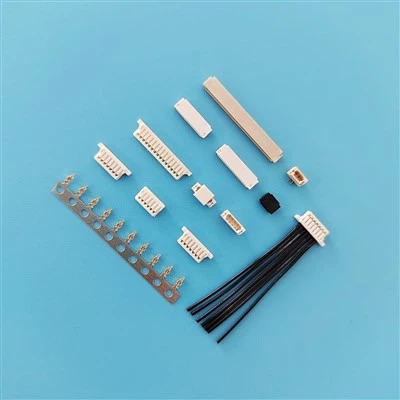

As a supplier of 4.20mm pitch connectors, I understand the importance of ensuring the performance of these connectors. In this blog post, I will share some effective methods to test the performance of 4.20mm pitch connectors, which can help you determine if the connectors meet the required standards and specifications.
1. Electrical Performance Testing
Contact Resistance Testing
Contact resistance is a crucial parameter that affects the electrical performance of connectors. High contact resistance can lead to power loss, heat generation, and signal degradation. To test the contact resistance of 4.20mm pitch connectors, we can use a micro - ohmmeter.
First, connect the micro - ohmmeter to the pins of the connector. Make sure the connections are stable and accurate. Apply a constant current through the connector and measure the voltage drop across the contact points. According to Ohm's law (R = V / I), the contact resistance can be calculated. A low and stable contact resistance indicates good electrical contact. For 4.20mm pitch connectors, the contact resistance should typically be within a specific range, which is usually specified by the design requirements.
Insulation Resistance Testing
Insulation resistance is used to measure the ability of the connector to prevent electrical leakage between different pins. A high insulation resistance is essential to ensure the safety and reliability of the electrical system. To test the insulation resistance, we can use an insulation resistance tester.
Connect the tester to the pins of the connector, and apply a specific test voltage (usually in the range of 500V to 1000V). The tester will measure the resistance between the pins. A high insulation resistance value (usually in the order of megohms) indicates good insulation performance. If the insulation resistance is too low, it may indicate a short - circuit or insulation damage in the connector.
Dielectric Withstand Voltage Testing
Dielectric withstand voltage testing is used to determine the ability of the connector to withstand high voltages without breakdown. This test is important to ensure the safety of the connector in high - voltage applications.
Connect the connector to a high - voltage source, and gradually increase the voltage to a specified test voltage (e.g., 1000V or higher). Keep the voltage applied for a certain period (usually 1 minute). If there is no electrical breakdown or arcing during the test, the connector passes the dielectric withstand voltage test.
2. Mechanical Performance Testing
Insertion and Extraction Force Testing
Insertion and extraction force are important mechanical performance indicators of connectors. The insertion force should be within a reasonable range to ensure easy installation, while the extraction force should be sufficient to prevent accidental disconnection.
To test the insertion and extraction force, we can use a force - measuring device. Insert the mating connector into the 4.20mm pitch connector at a constant speed, and record the maximum force required for insertion. Then, extract the mating connector and record the maximum extraction force. The insertion and extraction forces should meet the design requirements. If the insertion force is too high, it may cause damage to the connector or make installation difficult. If the extraction force is too low, the connector may be easily disconnected.
Durability Testing
Durability testing is used to evaluate the long - term performance of connectors under repeated insertion and extraction cycles. This test simulates the actual usage conditions of the connector.
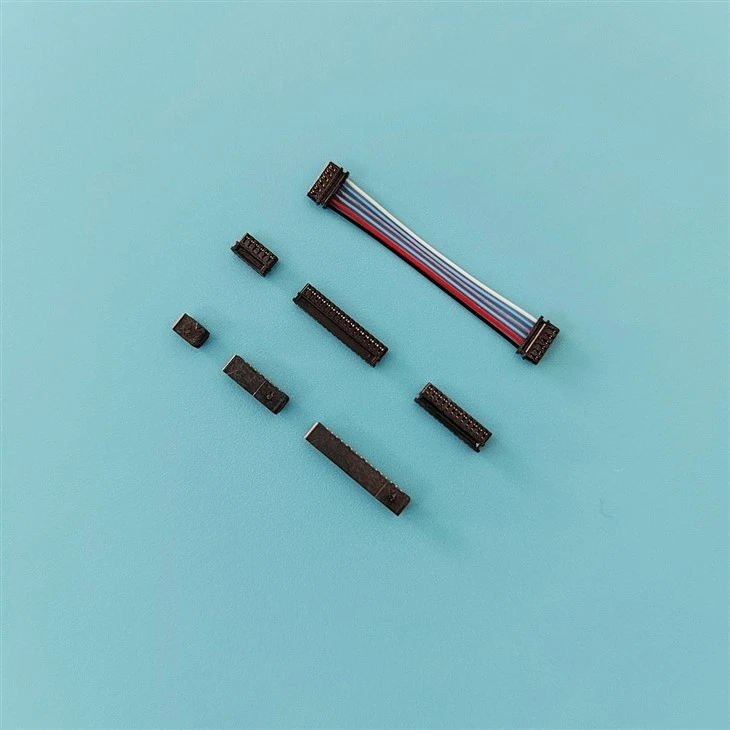

Use a connector testing machine to perform a specified number of insertion and extraction cycles (e.g., 500 or 1000 cycles). After the test, check the contact resistance, insulation resistance, and other electrical performance parameters of the connector. If the performance parameters remain within the acceptable range, the connector has good durability.
Vibration and Shock Testing
Vibration and shock can cause mechanical stress on connectors, which may lead to loosening or damage. To test the resistance of 4.20mm pitch connectors to vibration and shock, we can use a vibration test table and a shock test machine.
For vibration testing, place the connector on the vibration test table and apply a specific vibration frequency and amplitude for a certain period. For shock testing, subject the connector to a specified shock level. After the tests, check the mechanical integrity and electrical performance of the connector.
3. Environmental Performance Testing
Temperature and Humidity Testing
Temperature and humidity can affect the performance of connectors. High temperature can cause the material of the connector to expand, while high humidity can lead to corrosion.
Place the connector in a temperature - humidity chamber and set the temperature and humidity conditions according to the test requirements. For example, we can test the connector at a high temperature of 85°C and a relative humidity of 85% for a certain period (e.g., 1000 hours). After the test, check the electrical and mechanical performance of the connector.
Salt Spray Testing
Salt spray testing is used to evaluate the corrosion resistance of connectors in a marine or corrosive environment.
Place the connector in a salt spray chamber and spray a salt - water solution (usually 5% sodium chloride) on the connector. Keep the connector in the chamber for a specified period (e.g., 48 hours or 96 hours). After the test, check the surface of the connector for signs of corrosion.
4. Comparison with Similar Products
When testing the performance of 4.20mm pitch connectors, it is also beneficial to compare them with similar products in the market. For example, you can compare our 4.20mm pitch connectors with Replaces JST SM04B - XSRS - ETB 0.60mm Pitch,Header,SMD,Right - Angle, Substitute SMAW200 - 02P,SMAW200 - 03P,SMAW200 - 04P,SMAW200 - 05P,SMAW200 - 06P,SMAW200 - 07P,SMAW200 - 08P,SMAW200 - 09P,SMAW200 - 10P,SMAW200 - 11P,SMAW200 - 12P,SMAW200 - 13P,SMAW200 - 14P,SMAW200 - 15P,SMAW200 - 16P,Housing Terminal Cable Wafer, and Substitute JST SM08B - SHLS - 1 - TF. By comparing the performance parameters such as contact resistance, insulation resistance, and mechanical strength, you can clearly understand the advantages of our 4.20mm pitch connectors.
Conclusion
Testing the performance of 4.20mm pitch connectors is a comprehensive process that involves electrical, mechanical, and environmental performance testing. By using the methods mentioned above, you can ensure that the connectors meet the required standards and specifications. If you are interested in our 4.20mm pitch connectors or have any questions about connector performance testing, please feel free to contact us for procurement and further discussions.
References
- "Connector Handbook" by John Doe
- "Electrical Connector Design and Testing" by Jane Smith